

In an increasingly digital world, companies are constantly seeking to optimize their operations and ensure the efficiency of their information systems. Cloud computing has become central to this transformation, offering flexibility, scalability and efficiency.
Solutions such as Elastic Cloud demonstrate how moving mission-critical databases to the cloud can not only improve performance, but also offer a more robust and secure infrastructure. However, this transition is not without risks, and requires careful planning.
Advantages of the cloud: flexibility and scalability
One of the main advantages of moving to the cloud is the flexibility it offers. Companies can easily adjust their resources according to their needs, guaranteeing cost optimization and better management of peak demand. Elastic Cloud, for example, enables users to dynamically resize their deployments, offering great adaptability without the traditional infrastructure costs.
Lower costs:
Moving to the cloud can significantly reduce the costs associated with purchasing, maintaining and operating IT infrastructures. Pay-per-use models enable companies to pay only for the resources they consume, eliminating the need for heavy up-front investment in hardware and software.
Improved security and resilience
Security is a major concern for businesses, especially when it comes to mission-critical databases. Cloud providers, aware of these issues, are implementing advanced security measures, including encryption of data in transit and at rest, as well as robust backup and recovery protocols. These measures are designed to protect data against unauthorized access and potential loss.
Open to new technologies:
Traditional database systems, while stable, struggle to meet the speed requirements of modern digital business operations. Slow processing of transactions or queries can seriously hamper digital transformation initiatives. Migration to the cloud opens the door to advanced Machine Learning and Artificial Intelligence capabilities, enabling companies to exploit data more effectively, thanks to services offered by cloud providers and various managed service providers.
Security is another major concern:
Legacy databases are not equipped to cope with today's security threats, leaving sensitive data vulnerable to attack. In contrast, cloud providers are investing heavily in secure infrastructures and the systematic application of the latest security patches, offering robust protection against modern threats.
Cloud providers are investing heavily in advanced security measures to protect hosted data. These include firewalls, intrusion detection systems, data encryption and strict security protocols. Although security is often cited as a concern, the level of security offered by cloud solutions is generally superior to what many companies can afford in-house.
Scalability is essential in a world where telecommuting is becoming the norm:
Applications designed for fixed corporate networks are now inadequate for the increasing diversity of devices and connection locations. Cloud providers offer the flexibility to adjust resources to meet fluctuating needs, without the constraints of traditional physical infrastructures.
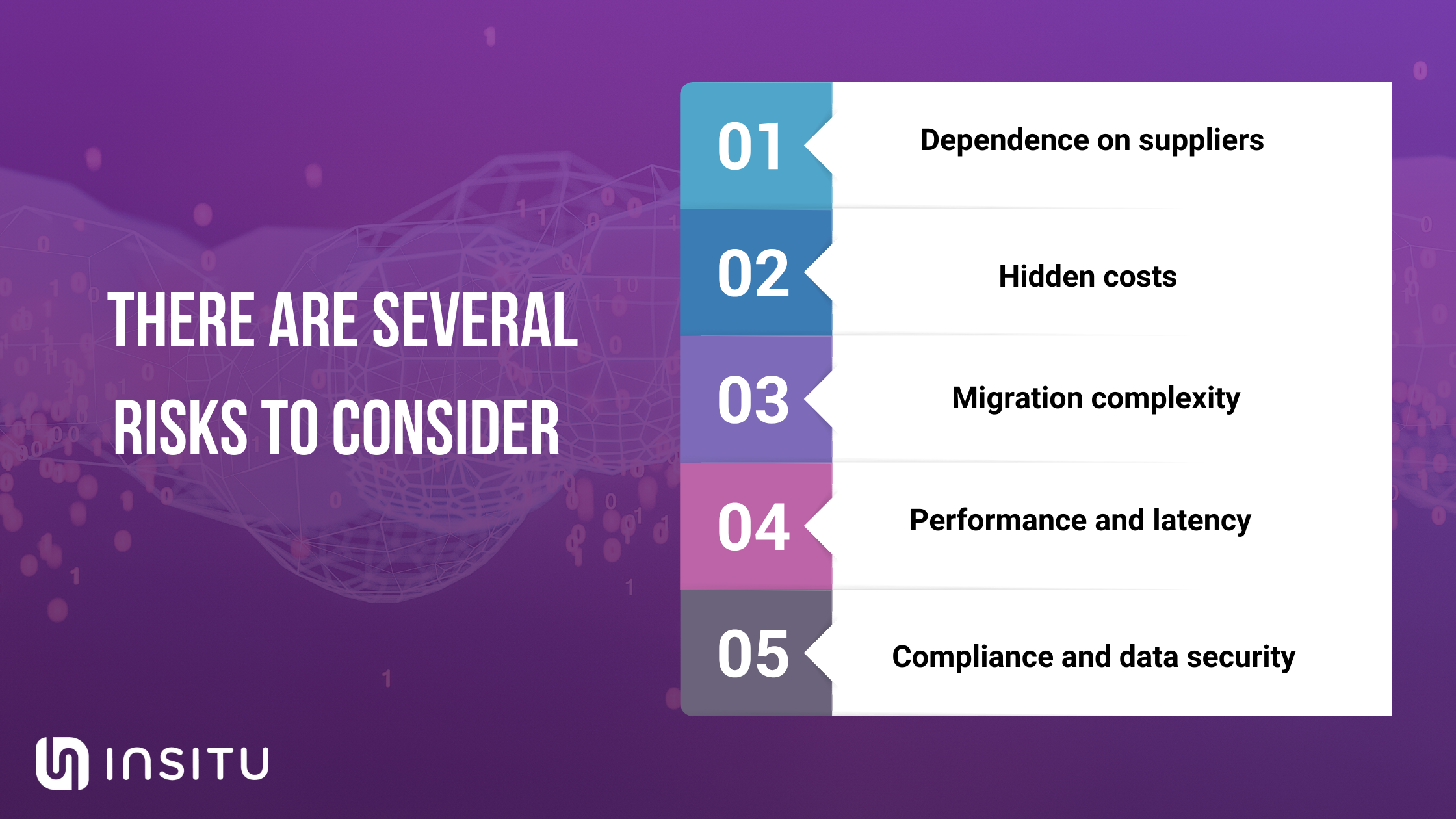
The challenges and risks of the cloud
Supplier dependency:
Choosing a cloud provider implies a certain degree of dependency, which can pose problems in terms of data control and operational flexibility. Cloud provider dependency is a major consideration for companies migrating to the cloud, affecting data control and operational flexibility.
Opting for a specific provider means carefully evaluating data management policies, the ability to remain agile in the face of technological evolutions, and long-term costs. This relationship can limit a company's agility, making it less able to adopt new technologies or migrate its data. The companies must therefore consider multi-cloud or hybrid architectures to avoid over-dependence and maintain operational flexibility.
In addition, negotiating terms of service and understanding the implications for security and regulatory compliance are essential to ensure the protection of sensitive data. Adopting a strategic approach to choosing a supplier, by carrying out in-depth assessments and planning transition scenarios, enables companies to minimize the risks associated with this dependency while securing an efficient and flexible migration to the cloud.
Hidden Costs:
Businesses must be vigilant about complex pricing structures that can conceal additional costs related to bandwidth, storage, or specific services. Conducting a detailed cost analysis is crucial to avoid budgetary surprises. Data transfer fees and additional operational costs can also accumulate quickly, making the cloud more expensive than anticipated.
Optimizing cloud resources to prevent over-provisioning and managing services effectively can help control these costs. Thus, understanding and implementing cloud financial governance practices is essential to maximize return on investment.
Migration Complexity:
Migrating to the cloud requires a thorough assessment of existing applications to determine their compatibility with the cloud environment. Challenges such as reconfiguring applications, migrating data without service interruptions, and training teams on new cloud technologies can complicate the process. Without adequate planning, businesses risk downtime, data loss, or security breaches. Comprehensive testing before migration and using specialized migration tools can mitigate these risks. Furthermore, engaging with experienced migration partners can provide the necessary expertise to navigate these challenges.
Compliance and Data Security:
Adhering to sector-specific regulations and protecting sensitive data remain major concerns. Businesses must ensure that cloud providers comply with industry standards such as GDPR, HIPAA, or PCI DSS, which often involves regular audits and certifications.
Implementing robust security policies, including data encryption in transit and at rest, is indispensable. Moreover, managing identities and access plays a crucial role in preventing unauthorized access. Businesses must also stay vigilant about legislative and regulatory developments to maintain compliance over time.
Performance and Latency:
Proximity of cloud data centers to end-users is crucial to minimize latency and optimize performance. Hybrid or multi-cloud architectures can offer solutions to reduce latency by placing resources closer to users.
It is also important to continuously monitor and optimize application performance to ensure they meet user expectations. Adopting caching techniques and content delivery networks (CDN) can significantly enhance application responsiveness. Finally, close collaboration with the cloud provider to quickly resolve performance issues is crucial for maintaining operational efficiency.
the next step?
The decision to migrate critical databases to the cloud must be taken carefully, weighing the benefits against the risks. Companies must not only consider the optimization and growth potentials offered by solutions like Elastic Cloud, but also remain vigilant about the technical and operational challenges that this transition might entail. A well-planned migration strategy, considering all these aspects, is essential for success in today's digital ecosystem.
At INSITU, we are dedicated to providing tailored cloud integration solutions that precisely meet your business needs. With our local expertise in Montreal, our team of AWS-certified professionals, and our commitment to security, performance, and support, we are the ideal partner to support your transition to the cloud. Discover how we can help you transform your IT infrastructure and fully leverage the cloud's potential. Contact us today for a consultation.
Contact us

Discover more recent posts

Complete Guide: Installing and Configuring SSL/TLS Certificates on Elasticsearch and Kibana
This guide will walk you step by step through the installation of certificates on Elastic within your infrastructure. We will...
Read more

FAQ – Why is data essential to modern mining management?
Why has data become so central to mining? In an article published by Kelsey Kidd, Sales Director at Worldsensing, we...
Read more

How to Install and Configure a Master Node for Your Elastic Cluster?
As part of deploying a high-performance and secure Elastic cluster, configuring a master node is a crucial step. This node...
Read more

Elastic Installation: Simple Guide
In a world where data volumes are skyrocketing, having a powerful and fast search engine is essential. Elastic is a...
Read more